

Resources
Effective Discipline
Let's Get This Straight
Discipline is not punishment.
Kid misbehavior is communication. It's telling you something's not quite right in their world. They're responding to a stressor or don't know how to do what you're asking.
They need support or instruction, which grown-ups have the awesome opportunity to provide. Your job is to figure out what the problem is, then respond in ways that solve it.
Let's define discipline as teaching and training.
The goal isn't to make kids pay for what they did.
The goal is to help them do better next time.
If your approach isn't doing that, it's not discipline...and it's probably not effective.
The Framework
Make a plan. Follow through. Reassess.
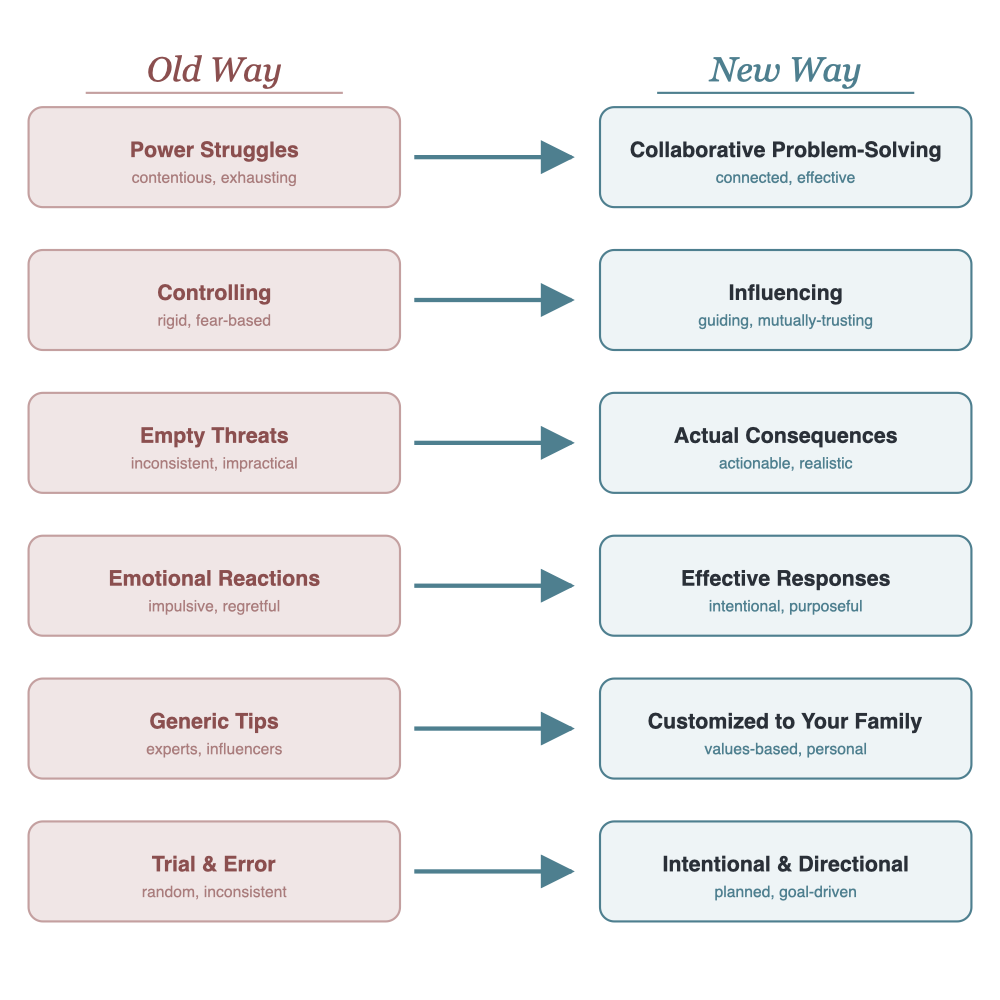
Trial-and-error discipline and spur-of-the-moment consequences leave families frustrated and full of conflict. There's a better way.
Begin with clear boundaries — Kids need to know exactly where the lines are. Not vaguely. Not "be good" or "behave yourself." Specific, concrete expectations they can actually follow. "We sit at the table during dinner." "Homework happens before screens." Clear is kind.
Consistently enforce and follow through — This is where most families falter. Skip the pointless power struggles and empty threats. Instead, establish consequences that are effective, realistic, and that you can actually follow through with. Every single time.
Earn more freedom — As your child shows they can handle the current boundaries, you loosen them. This is how you build trust and responsibility at the same time. They don't get freedom because they're older — they get it because they've shown they're ready.
It's not about being strict. It's about being structured. There's a big difference.
Workbook
A Plan for When Things Get Stressful

You need a plan to keep things G-rated in the kitchen. This workbook helps your family create one — with practices for talking about emotions, managing stress, and solving problems together.
- Practices for regulating emotions and managing stress as a family
- Strategies for talking about feelings — for adults and kids
- Printable worksheets and visuals to use every day
- A family plan you can build together and start using immediately
Proactive, Not Reactive
Have your plan before the meltdown.
Reactive discipline happens when you're caught off guard. You yell. You threaten.
You say something you don't mean and later regret.
We've all been there. The fix isn't more willpower. It's more planning.
Know your goal
Before you open your mouth, ask yourself: what am I trying to teach right now? If you can't answer that, you're not disciplining — you're venting. That's human, but it's not helpful.
Decide consequences ahead of time
When you decide consequences in the heat of the moment, they're usually too harsh, too random, or impossible to follow through on. Think it through when you're calm. Write it down if you need to.
Use the pause
You don't have to respond immediately. "I need a minute to think about this" is one of the most powerful things you can say as a parent. It models self-regulation and it keeps you from saying something you'll regret.
Debrief after, not during
Nobody learns anything in the middle of a meltdown. Not your kid, not you. Handle the moment. Keep everyone safe. Then talk about it later when everyone's calm.
YouTube
Watch & learn
@clairwhitecoaching
Check out my YouTube channel for honest conversations about parenting, wellness, and everything in between.
New videos regularly covering real-life parenting challenges, wellness tips, and other practical stuff.
Watch now →
Want something personalized?
Every family is different. If you want a discipline plan customized for yours, we can build it in a single session or coaching package.